
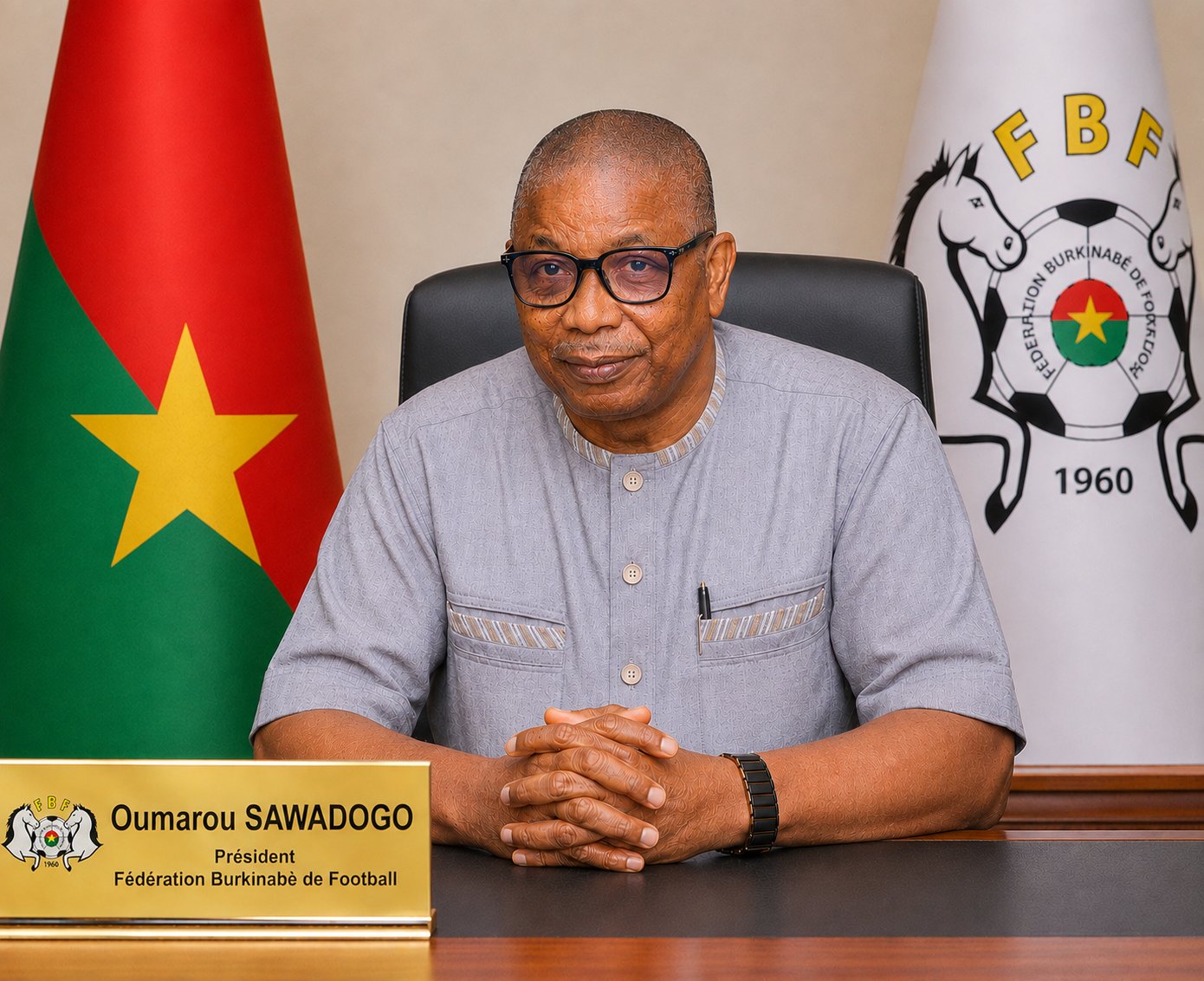
Nigeria loses WAFU-B presidency as Burkina Faso’s Sawadogo takes over after Gusau exit
Former Nigeria Football Federation (NFF) President Ibrahim Musa Gusau has lost his position as President of the West African Football Union Zone B (WAFU-B) following his resignation from the leadership of Nigerian football.
WAFU-B has officially announced Colonel-Major Oumarou Sawadogo, President of the Burkina Faso Football Federation, as the new head of the regional football body.
“Congratulations to President Oumarou Sawadogo!,” the regional body wrote on its official Twitter (X) account.
“We are pleased to welcome Colonel-Major Oumarou Sawadogo to the Presidency of WAFU-B.
“We wish him great success in this new role and look forward to working together to advance West African football,” WAFU-B said in an official announcement on Monday.
Sawadogo’s elevation follows Gusau’s resignation as NFF President on August 27, bringing an early end to his tenure at the NFF and, consequently, his leadership of the regional body.
Gusau had assumed the WAFU-B presidency in May 2025 after Ghana Football Association President Kurt Edwin Simeon-Okraku stepped down from the position following his election to the CAF Executive Committee. Gusau was previously the zone’s First Vice-President.
His appointment had placed Nigeria at the centre of the administration of football in WAFU Zone B, which comprises Nigeria, Ghana, Côte d’Ivoire, Burkina Faso, Benin Republic, Niger Republic and Togo.
Gusau’s departure from both positions follows a turbulent period for Nigerian football, during which the Super Eagles failed to qualify for the 2026 FIFA World Cup, while the Super Falcons missed the 2027 FIFA Women’s World Cup for the first time in the competition’s history.
The NFF confirmed that Gusau resigned after consultations with his family, friends and football stakeholders, saying his decision was intended to create room for a comprehensive and orderly reform of Nigerian football.
The resignation also came just 34 days before the scheduled end of Gusau’s four-year NFF tenure. He was elected NFF President in September 2022.
FIFA has since formally accepted the resignations of Gusau, General Secretary Mohammed Sanusi and members of the NFF Executive Committee, according to the NFF, while discussions involving FIFA, CAF, the National Sports Commission and the NFF administration continue on a comprehensive reform roadmap.
The leadership change at WAFU-B therefore adds another dimension to the ongoing restructuring of Nigerian football and its regional representation.
Sawadogo is not a newcomer to WAFU-B administration. Before assuming the presidency, he served as the zone’s Second Vice-President and has been involved in the regional body’s executive structure.
His appointment also means Burkina Faso now occupies the top administrative position in WAFU-B at a time when the zone is seeking greater cooperation and development across its seven member associations.
Gusau’s exit means Nigeria has lost both its NFF presidency and its direct hold on the WAFU-B presidency within a matter of weeks.
The development is likely to attract further attention as the National Sports Commission continues consultations with the NFF Congress and other stakeholders over the proposed reform of Nigerian football.
NSC Chairman Shehu Dikko has already disclosed that a draft reform roadmap has been shared with NFF Congress members for their inputs, with wider stakeholder consultations expected to continue this week.
As Nigeria begins the process of rebuilding its football administration, the loss of the WAFU-B presidency underscores the wider regional consequences of the leadership changes at the NFF.
The immediate task for the Nigerian football authorities will now be to ensure that the country’s interests and influence within WAFU-B remain protected under the new regional leadership while the domestic reform process gathers momentum.


