
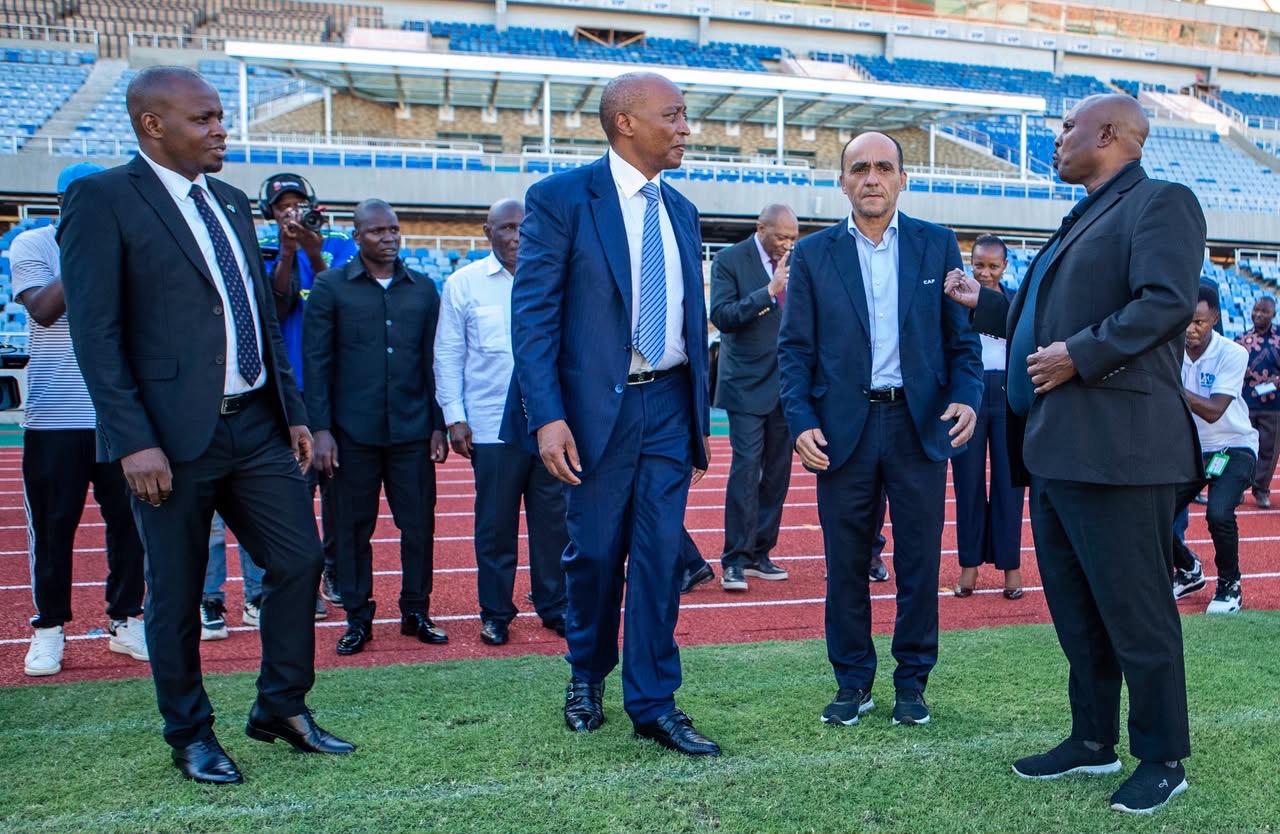
Patrice Motsepe explains why CAF restored AFCON’s two-year cycle
Confederation of African Football (CAF) President Dr Patrice Motsepe has explained that protecting African football’s financial interests, supporting its 54 member associations and safeguarding the interests of African players abroad were central to the decision to restore the Africa Cup of Nations (AFCON) to a two-year cycle.
Motsepe gave the explanation following Thursday’s unanimous decision by the CAF Executive Committee (EXCO) to reverse its previous plan to stage the continent’s flagship national team competition every four years.
CAF had announced the proposed four-year cycle in December 2025, alongside plans to introduce a new Africa Nations League from 2029. However, the governing body subsequently reconsidered the arrangement after acknowledging the time required for the proposed competition to deliver the expected financial and football development benefits.
In his statement, Motsepe said the decision was guided by the need to protect the interests of African football and its stakeholders.
“The decision by the CAF EXCO that the CAF AFCON should take place every two years was based on advancing, protecting and promoting the interests of African football and CAF’s 54 Member Associations, as well as the interests of African players employed by football clubs outside Africa,” he said.
The CAF president also identified concerns about the proposed Africa Nations League as another major factor behind the reversal.
He explained that the competition, which was initially designed to mirror the existing AFCON and take place every two years, would require several years before generating substantial financial resources and making a significant contribution to football development across the continent.
“We were also concerned by the several years required before the proposed new Africa Nations League Pan-African competition, which was supposed to be identical to the current AFCON and take place every two years, could make substantial financial and football development contributions to African football and make CAF competitions globally competitive and self-supporting,” Motsepe stated.
Under the revised calendar, the 2027 AFCON will proceed as planned, with Kenya, Tanzania and Uganda jointly hosting the tournament.
Motsepe expressed confidence in the East African hosts, confirming that the next edition would be followed by tournaments in 2028, 2031 and 2033.
“The next TotalEnergies CAF AFCON will take place in 2027 in Kenya, Tanzania and Uganda, and I am confident that it will be very successful. The subsequent AFCONs thereafter will take place in 2028, 2031 and 2033,” he said.
The revised schedule also takes account of the 2030 FIFA World Cup. Motsepe explained that AFCON and other continental national team competitions would not be staged during a World Cup year, in line with FIFA’s established tradition.
“The forthcoming FIFA World Cup will take place in 2030 and, in accordance with FIFA tradition, the final tournament of AFCON and other Confederations’ national team competitions may not take place during the year of the FIFA World Cup,” he added.
Beyond the competition’s financial and sporting significance, Motsepe highlighted AFCON’s cultural importance as a platform for bringing Africans together.
He described the tournament as an opportunity to celebrate the continent’s football heritage, diverse cultures, customs and traditions, while connecting people from Africa and the diaspora with supporters around the world.
“The AFCON competition is also about celebrating African football and Africa’s rich and diverse cultures, customs and traditions, and bringing people together from Africa’s 54 countries, the African Diaspora and throughout the world,” he said.
Motsepe concluded that the EXCO decision was taken in the collective interest of African football and would contribute to the continent’s long-term development.
“The CAF EXCO decision is in the best interest of African football and CAF’s 54 Member Associations and will also contribute significantly to the development and growth of football in Africa,” he stated.
The reversal brings an end to months of uncertainty over the future of AFCON’s frequency and confirms CAF’s return to the biennial format that has traditionally defined the competition.
With the 2027 edition remaining on schedule, attention will now turn to preparations in Kenya, Tanzania and Uganda, while CAF works towards implementing the revised calendar.


