
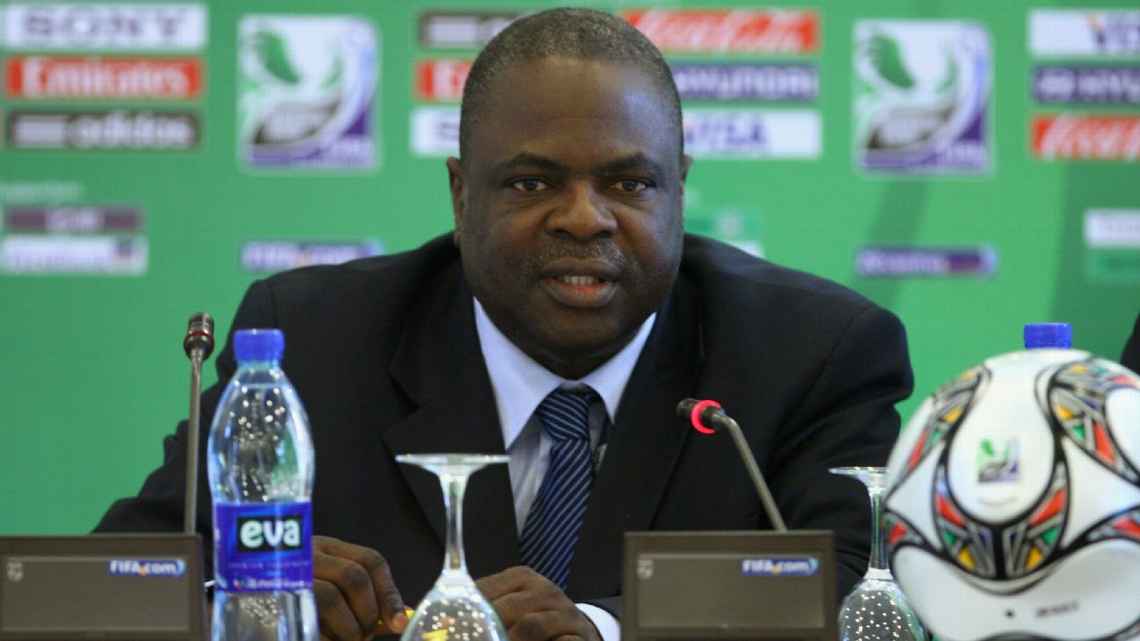
World Cup failures: Nigeria puts wrong people in right places in football, says Amos Adamu
Former Director-General of the National Sports Commission (NSC), Dr. Amos Adamu, has criticised Nigeria’s sports leadership, arguing that the country’s persistent underperformance stems largely from appointing the wrong people to manage its sporting institutions.
Adamu, a former executive committee member of FIFA and CAF, said Nigeria had enough qualified professionals to compete successfully on the international stage but continued to waste its human resources through poor appointments and decisions.
Speaking in an interview with Saturday Telegraph, he insisted that professional knowledge, experience and competence must take priority over political connections in the administration of sports.
“In Nigerian football, we put the wrong people in the right places. We have many people who can take Nigerian football to the highest levels, but we don’t put them there,” he said.
He added: “When I was managing sports in Nigeria, if you were not a professional, you had no place.”
The former sports administrator argued that sports management requires specialised knowledge and should not be treated as a responsibility that anybody can handle without appropriate training.
“Imagine putting non-professionals in positions where professionals are required. What result do you expect?” he asked.
Using journalism to illustrate his argument, Adamu said professional training was essential across specialised disciplines.
“It is like journalism. You go to school, study journalism and learn how to write professionally, and then somebody who only studied English is brought in to write a professional report,” he explained.
“The report may not communicate properly because the person does not have the professional training. People think anybody can just come into sports and manage it. No. You need professionals in every field. If you don’t put professionals in the right places, you will not get results.”
Adamu also questioned the qualifications of those heading sports institutions, arguing that the technical direction of each sport should be entrusted to people who understand its demands.
“Put the right people there. Look at the National Sports Commission. Who is heading it? What are his qualifications? What has he done in sports?” he asked.
“If you put people who don’t understand sports in charge of sports, they will continue to make the wrong decisions.”
He maintained that while administrators and politicians have important responsibilities, they should not interfere in technical matters outside their areas of competence.
“Qualified coaches and technical people should be in charge of the technical aspects of the sport. Politicians are politicians. I don’t have power over them. But they cannot tell me how to handle technical matters if they are not qualified to do so,” he said.
“I don’t talk to the chairman about technical matters. I talk to the coach. If I need money, I tell the chairman or the appropriate administrator to find the money. If they cannot get it, I will look for it myself.”
To reinforce his position, Adamu recalled a disagreement with the late Reverend Moses Iloh, a former president of the Nigeria Swimming Federation.
“I told him something very simple. He was a Reverend and I said to him, ‘You are a Christian and you go to church. Can you stand in the pulpit and preach?’ He said yes. I asked him, ‘Can I stand in the pulpit and preach?’ He said no,” Adamu recounted.
“I asked him why. He said, ‘You are not a pastor.’ I said, ‘Exactly. So don’t tell me what to do in sports when you are not trained in sports.’”
He said the exchange captured his belief that technical responsibilities should be handled by trained professionals.
“I told him: go and win souls, leave sports to the professionals. I am very practical about these things,” he said.
Adamu Questions Coaching Standards
The former FIFA official also questioned the standards used to assess national team coaches, arguing that trying hard should not be confused with delivering results.
“When I see what is happening in Nigerian sports, especially when Nigeria fails to qualify for the World Cup, I ask myself: ‘Do we have a coach?’” he said.
“Are you looking for somebody who will try, or somebody who will deliver? Anybody can try. But if you have a coach who cannot take you to the World Cup, why are you keeping him?”
He argued that coaching quality must match the ability of the players available.
“When you have players who are 60 percent good, you need a coach who is at least 70 percent good. But when you have players who are 60 percent good and a coach who is 50 percent good, he cannot teach them anything,” Adamu said.
“I am not looking for a coach who tries. I want a coach who can deliver results. I will give you what you need, but you must win. If you don’t win, I will fire you.”
Adamu further criticised the absence of sufficient competition in national team selection, insisting that players should earn their places through performance rather than personal recommendations.
“In those days, before you became a member of the national team, you had to earn it. You didn’t just take somebody and say, ‘This is one of the best Nigerian players,’” he said.
“If they say a player is good, bring him and let him be tested. If he was good, he stayed. If he was not, he left.”
Adamu’s position is that improving Nigeria’s sporting fortunes requires more than financial investment. In his view, professional appointments, qualified technical personnel, objective player selection and accountability for results must become central to sports administration.


