
From Grassroots to Glory: How Morocco built a women’s football powerhouse
Morocco’s latest success in women’s football is no longer a story about one club or one golden generation. It is the product of a deliberate development pathway that is now producing results from the grassroots to the continental elite.
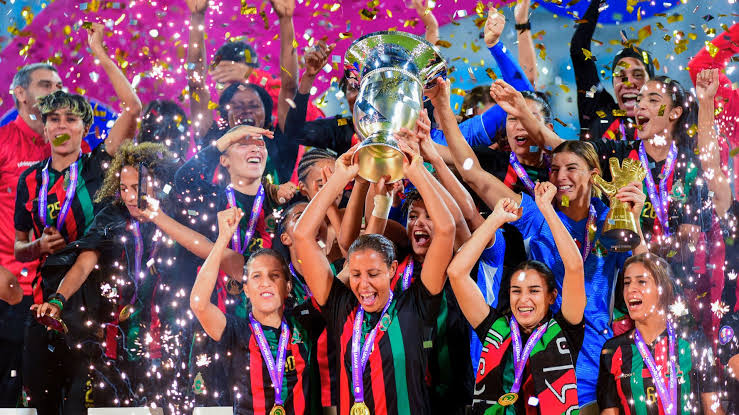
AS FAR’s historic triumph in the 2026 CAF Women’s Champions League has provided the latest evidence.
The Rabat-based side defeated South Africa’s Mamelodi Sundowns 3-1 in Sunday’s final in Ismailia, Egypt, to become the first club to win the competition three times and the first to successfully defend the title.
Imane Touriss scored twice while Hiba Youssoufi added another as AS FAR moved ahead of Sundowns, who had entered the final with two titles of their own.
But the significance of AS FAR’s third continental crown extends well beyond the trophy.
It represents the latest reward for a Moroccan women’s football system that has increasingly connected grassroots development, professional club football, youth national teams, elite facilities and international competition.
AS FAR: The standard at club level
AS FAR have established themselves as the dominant force in African women’s club football.
Their latest success takes their CAF Women’s Champions League titles to three, following victories in 2022 and 2025. They are also the first team to retain the competition since its launch in 2021.
Their rivalry with Sundowns has also become one of the defining features of the competition. At least one of the two clubs has appeared in every CAF Women’s Champions League final since the tournament began, highlighting the consistency of both teams at the summit of African women’s club football.
AS FAR’s latest title has also secured another opportunity on the global stage. The Moroccan champions will enter the second round of the 2027 FIFA Women’s Champions Cup, where they are scheduled to face DPR Korea’s Naegohyang, while their continental success has also secured a place in the inaugural FIFA Women’s Club World Cup in 2028.
The work begins long before the Champions League
The bigger Moroccan story, however, is what happens before players reach AS FAR or the senior Atlas Lionesses.
Since 2020, the Royal Moroccan Football Federation (FRMF) and its partners have pursued the professionalisation of the women’s league while strengthening the development of young players.
That approach has produced results across several levels of the game, in the domestic clubs, the senior national team, youth football and futsal.
The emergence of the young Atlas Lionesses is particularly significant.
Morocco have now appeared at three FIFA U-17 Women’s World Cup tournaments, with the young Atlas Lionesses reaching the round of 16 at the 2025 and 2026 editions. The two most recent tournaments were hosted in Morocco, giving the country’s emerging players the opportunity to compete against some of the strongest young teams in the world on home soil.
That progression matters because a sustainable women’s football system cannot depend only on recruiting established players.
It requires a pathway that identifies talent early, develops it systematically and gives young players access to competitive football before they reach the senior international stage.
The Atlas Lionesses reflect the progress
The senior national team has also been at the centre of Morocco’s transformation.
The Atlas Lionesses became the first North African and Arab team to reach the FIFA Women’s World Cup in 2023, following their historic run to the final of the 2022 Women’s Africa Cup of Nations.
The rise of the national team and the success of AS FAR should therefore not be viewed as separate stories.
They are increasingly connected parts of the same ecosystem.
Players developed within the Moroccan system can progress through domestic football, represent the national teams and, when opportunities arise, continue their careers abroad.
That creates a cycle in which domestic competition feeds the national team, international exposure improves players and the experience returns to strengthen the broader football environment.
A continental lesson
Morocco’s success also carries significance beyond its borders.
The 2026 CAF Women’s Champions League final once again demonstrated the growing strength of African women’s club football, with AS FAR and Sundowns meeting for the fourth time in the competition’s history. The two clubs entered the final as the only teams to have previously won the tournament twice.
The challenge for the rest of the continent is no longer simply to admire the results.
Morocco’s experience offers a practical reference point - invest early, strengthen domestic competitions, professionalise clubs, develop appropriate infrastructure, create opportunities for young players and expose them regularly to high-level international competition.
The Mohammed VI Football Academy, which has been developed as a major national talent-development facility, is another component of that broader strategy.
Sharing the experience
For African federations seeking to close the gap in women’s football, Morocco provides a case study in what sustained investment can produce.
The country’s progress has not happened overnight. It has been built through structures that connect development stages rather than treating grassroots football, professional leagues and national teams as separate projects.
AS FAR’s third African crown is therefore more than another entry in the record books.
It is a visible symbol of a system that is beginning to deliver consistently.
From the young Atlas Lionesses learning their trade to the senior national team competing on the global stage, and from domestic clubs to AS FAR’s continental dominance, Morocco’s women’s football story increasingly offers Africa both a success story and a model worth studying.
The next challenge will be to ensure that the experience is shared, adapted and translated across the continent because the real measure of Morocco’s progress may ultimately be how much it can help raise the level of African women’s football as a whole.


