
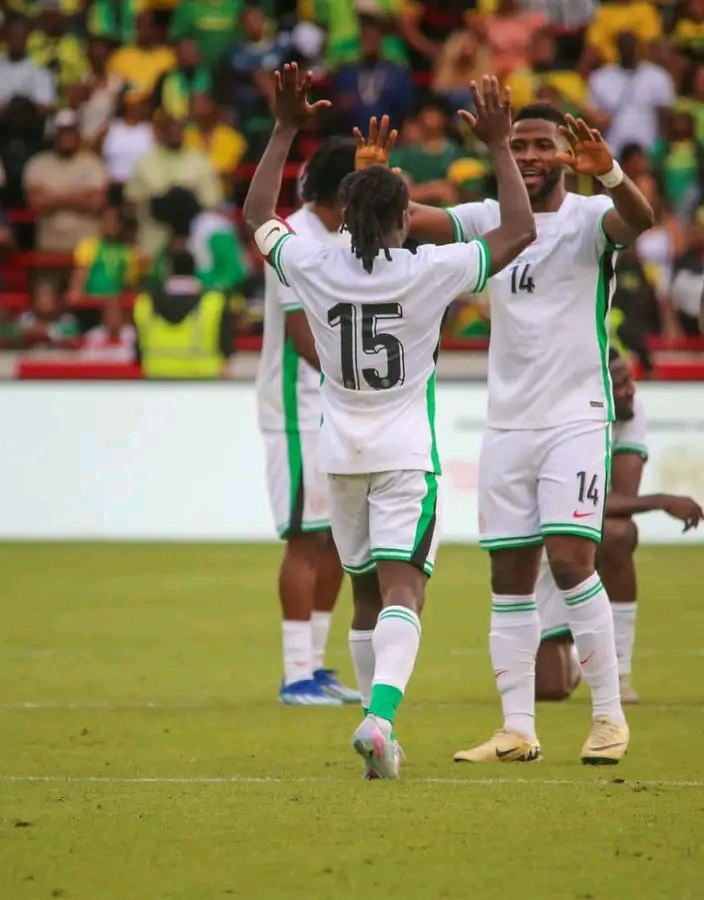
How Super Eagles can navigate AFCON Qualification without heartbreak
Ruth Dave Williams
Nigeria must confront the painful paradox of a national team capable of competing with Africa’s best yet repeatedly struggling to qualify for the tournaments in which it can excel.
Few things unite Nigerians like the Super Eagles. For 90 minutes, politicians, businesspeople, students, market women, mechanics, professors and football administrators become one thing: Nigerians. We shout, suffer and celebrate together.
That is why qualification failures hurt so deeply. This is not merely football. It is about a country that has produced generations of extraordinary players and continues to generate talent through its streets, schools, academies and communities.
Yet we have become a team that can look like a giant once the tournament begins but struggle to qualify in the first place.
WE ARE NOT SHORT OF TALENT
Nigeria has players in major leagues across the world, a vast pool of eligible talent, academies, grassroots football, passionate supporters and a proud history. When everything comes together, the Super Eagles can compete with any team in Africa.
We have seen it at recent AFCON tournaments. That is precisely why qualification failures are so painful. It is one thing to lose because you lack quality; it is another to possess that quality and still fail because the system around the team did not function.
WE HAVE BEEN LOOKING AT THE WRONG PROBLEM
Whenever Nigeria struggles, we blame the coach, players, NFF, pitch, referee, injuries or permutations. Then the cycle repeats.
The bigger question is not who is coaching the Super Eagles, but what system we have built around them.
Coaches will come and go, players will retire and administrators will change. The institution must endure—and be strong enough to make qualification routine.
QUALIFICATION MUST BECOME A NATIONAL PROJECT
Within 90 days, the NFF should establish a permanent Super Eagles Qualification and Performance Unit led by a full-time technical director and staffed by analysts, medical personnel, logistics specialists, legal officers and data managers. The unit should remain operational throughout every four-year cycle, with quarterly reports to the NFF executive committee and an annual public summary.
Its responsibilities should include tracking opponents, injuries, suspensions, eligibility, form, venues, pitches, travel, required points and every relevant permutation. A campaign plan should be approved at least six months before the first qualifier and updated after every match.
The unit should set measurable targets: a minimum of 80 percent availability for first-choice players, confirmation of venues and training sites at least 90 days before home matches, completion of opponent dossiers at least 30 days before each fixture, and achievement of the points total required for qualification before the final match whenever mathematically possible.
The NFF president should appoint the unit’s leadership, while an independent oversight panel comprising former internationals, coaches, sports administrators and finance professionals should review its performance after every campaign.
Qualification should be planned and measured like a national campaign. Player availability, preparation time, travel readiness, opposition intelligence, home-match readiness and points secured should all be monitored.
Our philosophy should be simple:
Qualify first. Win the tournament second.
STOP REBUILDING THE SUPER EAGLES
Within six months, the NFF technical committee should publish a national-team football philosophy covering playing principles, recruitment standards, youth-team alignment, fitness expectations and transition pathways. That framework should apply across the Super Eagles and national youth teams.
The head coach should receive a contract lasting at least one full qualification cycle, subject to annual performance reviews. The contract should include measurable targets: qualification, minimum points per match, player-availability standards, integration of at least three emerging players per year and compliance with the national technical framework.
The NFF should publish the framework and a yearly performance scorecard. A coach should be replaced only after a documented review against those targets, except in cases of serious misconduct or a breakdown of the working relationship. This would prevent short-term public pressure from producing another unnecessary reset.
We cannot rebuild the team from scratch every few months.
KNOW OUR PLAYERS BEFORE WE NEED THEM
Within 120 days, the NFF should create a secure football intelligence system covering every Nigerian-eligible player aged 15 and above who is active in professional, academy, university or organized grassroots football.
The system should record:
Club and league
Minutes and current form
Position
Injury status and workload
Eligibility and passport status
International experience
Development trajectory
Availability
The NFF should assign regional and international scouts to update the database monthly, with clubs and national-team medical staff submitting verified information during international windows. The target should be a minimum of 500 active player profiles in the first year and 95 percent monthly data completeness thereafter.
A legal and eligibility desk should resolve passport, nationality and clearance issues at least six months before a player is expected to be selected. The technical director should present quarterly reports identifying emerging options and succession plans for every key position.
We should not discover Nigerian footballers through social media.
The NFF should know before the public knows.
BUILD A 45–50-PLAYER PIPELINE
Within 60 days, the head coach and technical director should publish a monitored pool of 45–50 players divided into first-choice, rotation and development groups. Every position should have at least two credible options, and the five most vulnerable positions should have three.
The pool should be reviewed after every international window and formally updated every quarter. Each player should have an individual plan covering fitness, tactical role, injury risk, club situation and international availability.
The NFF should target a minimum of 35 players receiving meaningful international minutes during each qualification cycle, reducing dependence on a small core. At least five players under 23 should be assessed annually for integration, provided they meet performance and readiness standards.
If Victor Osimhen or another key player is unavailable, the solution should already exist within the national-team structure. We should never again ask, “Who do we call now?”
MAKE HOME ADVANTAGE MEAN SOMETHING
Within six months, the NFF, Nigeria Sports Commission, state governments and venue operators should adopt a national home-match standard covering pitch quality, floodlights, training grounds, security, ticketing, crowd management, transport, hotels, medical support and broadcast facilities.
Each proposed venue should undergo an inspection 90 days before a qualifier and a final certification 21 days before kickoff. Any venue failing the standard should be replaced at least 60 days before the match.
The NFF should publish a venue-readiness scorecard after every inspection. The target should be 100 percent compliance for certified venues, zero match-day pitch failures and completion of team travel, accommodation and medical plans at least 30 days before each fixture.
The Nigeria Police Force, state security agencies and venue operators should submit joint security plans, while the host state should appoint a match operations coordinator accountable for delivery. Supporters should receive clear ticketing and transport information at least two weeks before kickoff.
Our passion should be a competitive advantage. Home should mean something.
SCOUT OPPONENTS PROPERLY
At least 30 days before every qualifier, the Qualification and Performance Unit should deliver a technical dossier covering the opponent’s build-up, defensive structure, key players, set pieces, away form, reaction to conceding and performance after the 60th minute.
The dossier should include video analysis of at least five recent matches, two scenario-based tactical plans and a set-piece report. The head coach should approve a match plan no later than 14 days before kickoff, with a contingency plan for early injuries, red cards or a change in formation.
After each match, analysts should complete a review within 72 hours, identifying whether the plan was executed and which adjustments are required. The target should be 100 percent dossier completion and at least two full tactical sessions dedicated to each opponent during every camp.
Talent can win a moment. Preparation wins campaigns.
CONNECT GRASSROOTS FOOTBALL TO THE SUPER EAGLES
Within 12 months, the Nigeria Sports Commission, working with state governments, the NFF and the private sector, should publish a national grassroots football map identifying facilities, academies, schools, coaches, competitions and talent gaps in every state.
The government and its partners should establish or rehabilitate at least 1,000 community football pitches across Nigeria over five years: 200 in the first year and 200 annually thereafter. Each project should have a named location, budget, funding source, delivery deadline, maintenance plan and responsible agency. Progress should be published quarterly, including photographs, expenditure and usage data.
The NFF should create a standardized pathway:
Grassroots → Academies → U15 → U17 → U20 → U23 → Domestic Professional Football → Super Eagles.
By the end of the second year, every state should have at least one accredited youth development centre linked to regional scouting networks. Coaches should receive annual certification, and youth teams should be assessed not only by tournament results but also by player progression, minutes played, education and movement into higher levels.
The NFF should track at least 100 high-potential players annually through the pathway and publish anonymized progression data. Domestic clubs should receive incentives for developing and fielding eligible young players, while the Nigeria Football Federation should require national youth-team coaches to submit individual development reports after every camp.
If we want to produce footballers consistently, we must invest in the environment that produces them.
TELL NIGERIANS THE TRUTH
Within 60 days of the end of every qualification campaign, successful or not, the NFF should publish a Super Eagles Qualification Audit.
The audit should report: Points won and lost, including avoidable dropped points. Player availability and injury records. Administrative, logistical, tactical and facility failures. Spending against the approved campaign budget. Performance against pre-campaign targets. Corrective actions, responsible officials and deadlines
The NFF should appoint an independent review panel to verify the report and hold a public briefing within 30 days of publication. Every corrective action should have a named owner and a completion date, with progress reviewed quarterly until resolved.
This should not be a blame game. It should be a process of learning. Nigerians deserve to know that every painful defeat produced a lesson.
THE SUPER EAGLES DESERVE BETTER
Watching the World Cup without Nigeria is deeply painful. We see the flags, hear the anthems and watch other African countries take the stage, asking: Why are we not there?
Not because Nigeria lacks footballers, passion or competitive ability, but because we have failed to make qualification systematic.
Pain alone will not change that.
We need reform.
Nigeria does not need another miracle. We need a system that tracks players, prepares properly, gives coaches continuity, studies opponents, protects the team from administrative failures, develops young talent, makes home matches an advantage and learns from mistakes.
Our footballers have shown what is possible. When the Super Eagles reach a tournament, they can compete, fight, surprise and make Nigerians proud.
Our responsibility is to ensure they have the opportunity.
The Super Eagles should not be a team Nigerians desperately hope will qualify.
They should be a team Nigerians confidently expect to see at the AFCON and the World Cup.
We owe that to the players, the supporters, the children playing football on Nigerian streets—and to ourselves.
Ruth Dave Williams is a passionate freelance footballer writer. She lives in Abuja


