
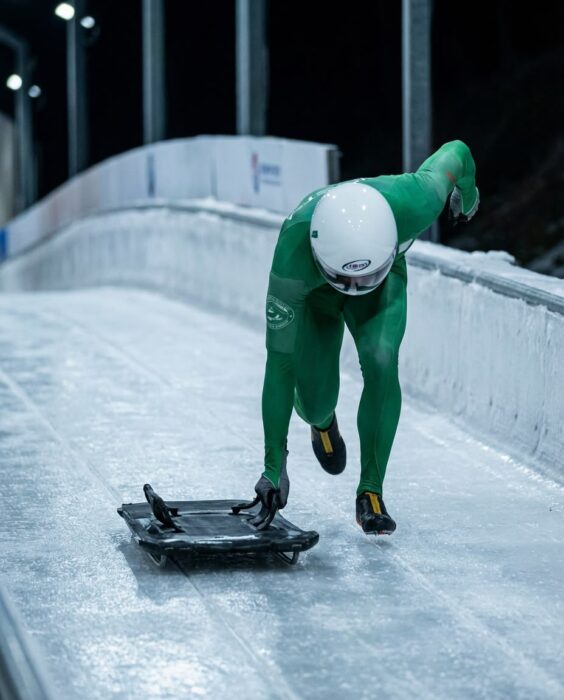
Oyebanjo-Odofin spends $30,000 of personal funds chasing Winter Olympics dream
Nigerian skeleton athlete Yinka Oyebanjo-Odofin has revealed that he has spent approximately $30,000 of his personal funds pursuing his Winter Olympics ambition, lamenting the lack of financial support and government allowances despite representing the country at international competitions.
Oyebanjo-Odofin, who competes on the International Bobsleigh and Skeleton Federation (IBSF) circuit, is working towards qualifying for the 2030 Winter Olympics but says the financial burden of participating in the expensive winter sport has largely fallen on him.
The athlete disclosed that he personally spent about $30,000 during his debut season in 2025/26, covering training, travel, accommodation, equipment and other competition-related expenses.
He added that the financial demands have continued to increase, with his projected budget for the current season exceeding $49,000. However, he has so far secured only about 12 per cent of the required amount.
Oyebanjo-Odofin expressed disappointment that despite the sacrifices involved in representing Nigeria internationally, he had not received government allowances to support his participation.
He explained that the cost of training remains a major challenge, with each run costing approximately $50. The expense sometimes forces him to limit the number of runs during training sessions, even when additional practice is required to improve his performance.
The cost of essential equipment further compounds his financial difficulties. According to him, a helmet can cost more than $500, while specialised shoes can approach $1,000, with equipment quality and aerodynamic features playing important roles in the sport.
Other expenses include coaching, accommodation, transportation and access to training facilities across different countries.
The athlete said the financial constraints were affecting his ability to prepare adequately for competitions, stressing that sustained investment was essential for athletes to remain competitive in winter sports.
Despite the challenges, Oyebanjo-Odofin remains determined to improve his international ranking. His immediate target is to break into the top 70, a milestone he believes would enhance his chances of accessing higher-level World Cup and World Championship competitions in the following season.
His ultimate ambition is to qualify for the 2030 Winter Olympics and make history for Nigeria in skeleton.
During his 2025/26 debut season, Oyebanjo-Odofin competed in 11 races across Whistler, Lake Placid, PyeongChang, Igls, Winterberg and St Moritz.
He also set six Nigerian men's track records, finished 94th overall with 94 points and emerged as the second-highest-ranked male athlete representing an African country.


