
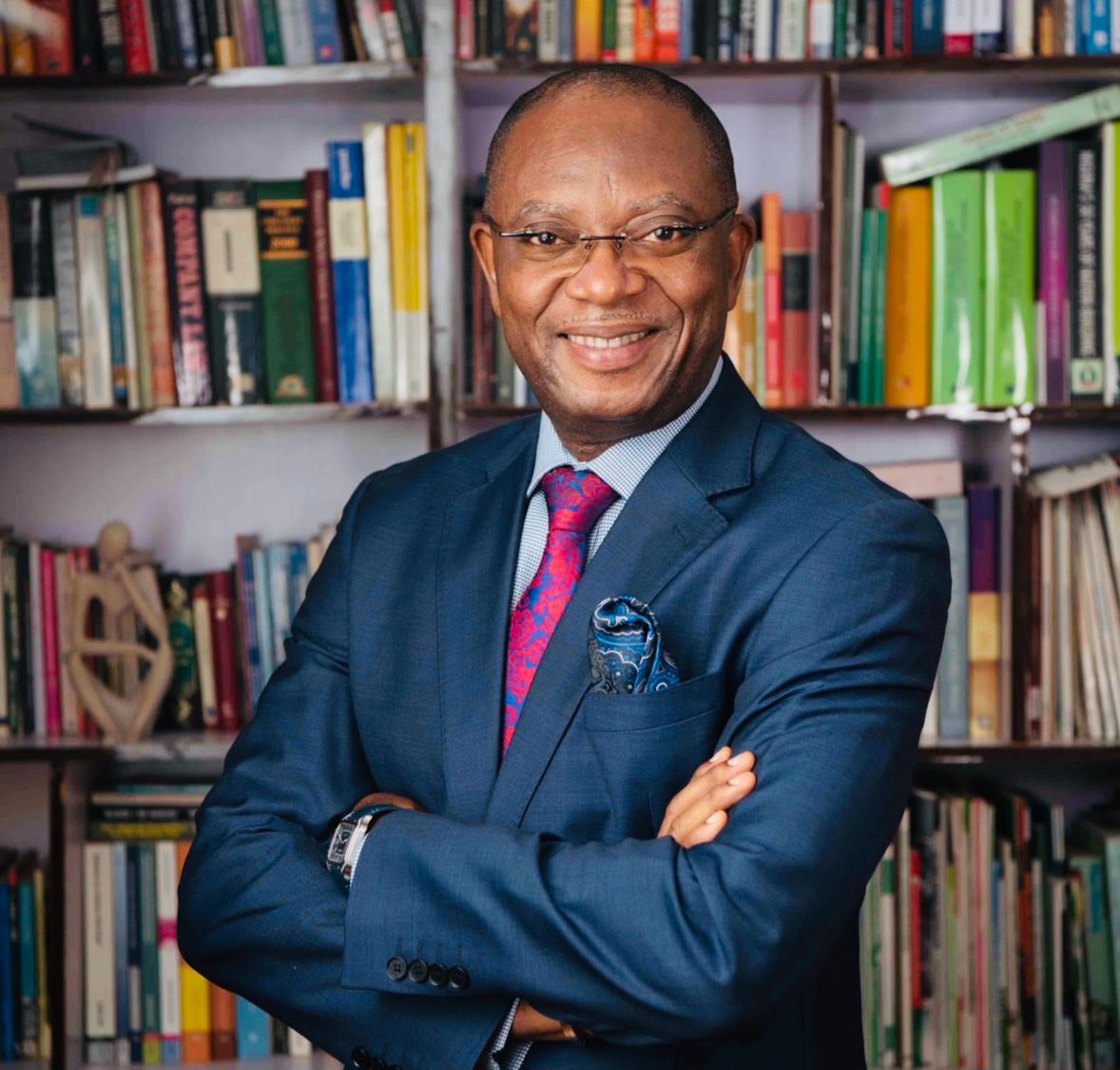
Who is Sampson Ebomhe? Lawyer proposed to lead NFF Normalisation Committee
From the 2014 NFF electoral process to the proposed Normalisation Committee, Sampson Ebomhe is returning to one of the most challenging assignments in Nigerian football administration.
For Sampson Ebomhe, Nigerian football administration is not unfamiliar territory.
More than a decade after he chaired the Nigeria Football Federation Electoral Committee that conducted the 2014 NFF elections, the Nigerian lawyer is once again being placed at the centre of a major transition in the country’s football administration.
This time, however, the assignment is considerably broader.
Ebomhe has emerged as the proposed chairman of the five-member NFF Normalisation Committee, according to a FIFA communication dated November 18, 2026, cited by reports covering the development.
The proposed committee also includes Dr Joe Abah, Godwin Enakhena, Amina Yerima and former Super Eagles captain Daniel Amokachi.
The FIFA communication followed consultations with the Confederation of African Football (CAF), but the proposed appointments remain subject to FIFA’s eligibility and integrity checks before final confirmation.
If cleared and formally appointed, Ebomhe will be handed responsibility for helping steer Nigerian football through one of the most consequential administrative periods in its recent history.
So, who is Sampson Ebomhe?
A lawyer first, but with deep football experience
Ebomhe is an experienced Nigerian lawyer whose professional career has extended across corporate law, telecommunications, government regulation, litigation, policy formulation and sports.
He is a Partner at George Etomi & Partners, where the firm’s professional profile identifies him as Managing Partner of its Abuja office.
His areas of specialisation include telecommunications, general corporate and commercial law, government regulatory services, policy formulation and drafting legislation for the National Assembly.
The firm’s profile also records his involvement in high-profile transactions spanning the telecommunications, maritime and sports sectors.
That legal and regulatory background is particularly relevant to the role he may now be asked to undertake.
A Normalisation Committee is not simply an interim football management body. Its work involves governance, institutional stability, electoral processes and the creation of a credible pathway back to an elected administration.
Ebomhe’s professional background therefore offers a combination of legal knowledge and previous football-administration experience.
Over three decades at the Nigerian Bar
Ebomhe studied Law at the University of Benin, graduating with an LL.B in 1987.
He subsequently attended the Nigerian Law School, obtaining his B.L. in 1988, and was admitted to practise law in Nigeria that same year.
His career has since developed across several areas of legal practice, including commercial and civil litigation, regulatory matters and corporate advisory work.
The George Etomi & Partners profile describes him as having extensive experience in alternative dispute resolution and litigation, while also highlighting his work in policy and legislative drafting.
That combination of law, policy and regulation has taken him beyond the courtroom and into some of Nigeria’s most important institutional and commercial assignments.
His link with Nigerian football dates back years
Ebomhe’s involvement with Nigerian football administration became particularly prominent in 2014.
At a time when the NFF was experiencing a serious electoral crisis, the General Assembly reconstituted the federation’s Electoral Committee and appointed Ebomhe as chairman.
His committee was tasked with conducting the 2014 elections into the NFF Executive Committee.
The assignment came amid controversy surrounding an earlier electoral process and intense disagreements over the legitimacy of the various processes.
The newly constituted committee subsequently issued electoral guidelines and began preparations for the September 4 election.
In announcing the guidelines, Ebomhe stressed that the committee’s mandate was to conduct an electoral process that would be free, fair, transparent and open to qualified candidates.
The committee also dealt with issues surrounding the number of ordinary positions available on the NFF Executive Committee, clarifying that eight ordinary members — rather than nine — were to be elected in accordance with the NFF Statutes.
That episode demonstrated one of the characteristics that may now become important in his new assignment: the ability to operate at the intersection of football politics, electoral rules and institutional regulations.
The 2014 NFF election
On September 30, 2014, the NFF election eventually took place in Warri, Delta State.
Amaju Pinnick, then chairman of the Delta State Football Association, emerged as NFF President after securing 32 votes from the 44 available.
It was Ebomhe, as chairman of the electoral committee, who announced the result.
Dominic Iorfa finished second with eight votes, while former NFF Secretary-General Taiwo Ogunjobi received four votes.
Seyi Akinwumi was elected First Vice-President.
The election itself was surrounded by legal and administrative controversy, reflecting the turbulent nature of Nigerian football governance at the time.
The experience would provide Ebomhe with a first-hand understanding of the complexities involved in conducting an NFF electoral process under intense scrutiny.
The lessons from Warri
The events did not end with the announcement of the results.
Following challenges to parts of the electoral process, some positions were subsequently affected by decisions of the NFF Electoral Appeals Committee.
Ebomhe was again required to navigate the difficult terrain.
In December 2014, he said the experience of conducting the Warri election had provided important lessons for future electoral processes.
He acknowledged that the appeals process had exposed issues that the electoral committee would need to consider more carefully in subsequent elections.
For a man who may now be responsible for preparing the ground for another NFF election, those experiences could prove valuable.
The circumstances are different, but the fundamental challenge remains familiar: creating an electoral process capable of earning confidence among football stakeholders.
His football work goes beyond elections
While Ebomhe’s 2014 electoral role is perhaps his most visible involvement with the NFF, it is not his only connection to football administration.
According to the profile of George Etomi & Partners, he led the advisory team involved in the restructuring of the Nigerian League Management Committee (NLMC) and drafted league regulations.
That experience gives another dimension to his proposed Normalisation Committee role.
The task before the committee is not merely electoral.
It comes at a time when Nigerian football is facing questions around governance, institutional structures, domestic competitions and the relationship between the federation and the wider football ecosystem.
Having previously worked on football restructuring and league regulations, Ebomhe comes into the proposed assignment with some experience in examining the rules and structures underpinning the game.
National Sports Commission assignment
His involvement in sports administration also continued beyond the NFF.
Recent reports indicate that Ebomhe was appointed Vice Chairman of the seven-member Electoral Committee constituted by the National Sports Commission in 2025 to oversee National Sports Federations elections.
That assignment further exposed him to the wider governance architecture of Nigerian sports.
His profile, therefore, is not that of a lawyer being introduced to sports administration for the first time.
Rather, he has moved through different aspects of sports governance — from league restructuring to federation elections and sports-federation electoral processes.
Why a lawyer may be important at this moment
The timing of the proposed appointment is critical.
FIFA approved the establishment of a Normalisation Committee for the NFF on October 22, 2026, following the crisis that resulted in the resignation of the federation’s leadership.
The decision followed the resignation of former NFF President Ibrahim Musa Gusau, General Secretary Mohammed Sanusi and members of the NFF Executive Committee in August.
The NFF had subsequently placed its Secretariat under an interim administrative arrangement while discussions continued with FIFA, CAF and Nigerian authorities.
FIFA said the Normalisation Committee would manage the affairs of the federation pending fresh elections.
Its mandate will end once it completes its assigned tasks, but not later than May 31, 2027.
Importantly, FIFA also stipulated that members of the Normalisation Committee would not be eligible to contest positions in the subsequent NFF elections.
That provision is significant.
It means the committee members are expected to function as transition managers rather than potential beneficiaries of the electoral process they help organise.
For Ebomhe, this creates a clear line between his proposed role and any future ambition within the NFF.
The football crisis behind the intervention
The Normalisation Committee is being established against the backdrop of a difficult period for Nigerian football.
Who is Sampson Ebomhe? Lawyer Proposed to Lead NFF Normalisation Committee
From the 2014 NFF electoral process to the proposed Normalisation Committee, Sampson Ebomhe is returning to one of the most challenging assignments in Nigerian football administration.
By SavidNews
For Sampson Ebomhe, Nigerian football administration is not unfamiliar territory.
More than a decade after he chaired the Nigeria Football Federation Electoral Committee that conducted the 2014 NFF elections, the Nigerian lawyer is once again being placed at the centre of a major transition in the country’s football administration.
This time, however, the assignment is considerably broader.
Ebomhe has emerged as the proposed chairman of the five-member NFF Normalisation Committee, according to a FIFA communication dated November 18, 2026, cited by reports covering the development.
The proposed committee also includes Dr Joe Abah, Godwin Enakhena, Amina Yerima and former Super Eagles captain Daniel Amokachi.
The FIFA communication followed consultations with the Confederation of African Football (CAF), but the proposed appointments remain subject to FIFA’s eligibility and integrity checks before final confirmation.
If cleared and formally appointed, Ebomhe will be handed responsibility for helping steer Nigerian football through one of the most consequential administrative periods in its recent history.
So, who is Sampson Ebomhe?
A lawyer first, but with deep football experience
Ebomhe is an experienced Nigerian lawyer whose professional career has extended across corporate law, telecommunications, government regulation, litigation, policy formulation and sports.
He is a Partner at George Etomi & Partners, where the firm’s professional profile identifies him as Managing Partner of its Abuja office.
His areas of specialisation include telecommunications, general corporate and commercial law, government regulatory services, policy formulation and drafting legislation for the National Assembly.
The firm’s profile also records his involvement in high-profile transactions spanning the telecommunications, maritime and sports sectors.
That legal and regulatory background is particularly relevant to the role he may now be asked to undertake.
A Normalisation Committee is not simply an interim football management body. Its work involves governance, institutional stability, electoral processes and the creation of a credible pathway back to an elected administration.
Ebomhe’s professional background therefore offers a combination of legal knowledge and previous football-administration experience.
Over three decades at the Nigerian Bar
Ebomhe studied Law at the University of Benin, graduating with an LL.B in 1987.
He subsequently attended the Nigerian Law School, obtaining his B.L. in 1988, and was admitted to practise law in Nigeria that same year.
His career has since developed across several areas of legal practice, including commercial and civil litigation, regulatory matters and corporate advisory work.
The George Etomi & Partners profile describes him as having extensive experience in alternative dispute resolution and litigation, while also highlighting his work in policy and legislative drafting.
That combination of law, policy and regulation has taken him beyond the courtroom and into some of Nigeria’s most important institutional and commercial assignments.
His link with Nigerian football dates back years
Ebomhe’s involvement with Nigerian football administration became particularly prominent in 2014.
At a time when the NFF was experiencing a serious electoral crisis, the General Assembly reconstituted the federation’s Electoral Committee and appointed Ebomhe as chairman.
His committee was tasked with conducting the 2014 elections into the NFF Executive Committee.
The assignment came amid controversy surrounding an earlier electoral process and intense disagreements over the legitimacy of the various processes.
The newly constituted committee subsequently issued electoral guidelines and began preparations for the September 4 election.
In announcing the guidelines, Ebomhe stressed that the committee’s mandate was to conduct an electoral process that would be free, fair, transparent and open to qualified candidates.
The committee also dealt with issues surrounding the number of ordinary positions available on the NFF Executive Committee, clarifying that eight ordinary members — rather than nine — were to be elected in accordance with the NFF Statutes.
That episode demonstrated one of the characteristics that may now become important in his new assignment: the ability to operate at the intersection of football politics, electoral rules and institutional regulations.
The 2014 NFF election
On September 30, 2014, the NFF election eventually took place in Warri, Delta State.
Amaju Pinnick, then chairman of the Delta State Football Association, emerged as NFF President after securing 32 votes from the 44 available.
It was Ebomhe, as chairman of the electoral committee, who announced the result.
Dominic Iorfa finished second with eight votes, while former NFF Secretary-General Taiwo Ogunjobi received four votes.
Seyi Akinwumi was elected First Vice-President.
The election itself was surrounded by legal and administrative controversy, reflecting the turbulent nature of Nigerian football governance at the time.
The experience would provide Ebomhe with a first-hand understanding of the complexities involved in conducting an NFF electoral process under intense scrutiny.
The lessons from Warri
The events did not end with the announcement of the results.
Following challenges to parts of the electoral process, some positions were subsequently affected by decisions of the NFF Electoral Appeals Committee.
Ebomhe was again required to navigate the difficult terrain.
In December 2014, he said the experience of conducting the Warri election had provided important lessons for future electoral processes.
He acknowledged that the appeals process had exposed issues that the electoral committee would need to consider more carefully in subsequent elections.
For a man who may now be responsible for preparing the ground for another NFF election, those experiences could prove valuable.
The circumstances are different, but the fundamental challenge remains familiar: creating an electoral process capable of earning confidence among football stakeholders.
His football work goes beyond elections
While Ebomhe’s 2014 electoral role is perhaps his most visible involvement with the NFF, it is not his only connection to football administration.
According to the profile of George Etomi & Partners, he led the advisory team involved in the restructuring of the Nigerian League Management Committee (NLMC) and drafted league regulations.
That experience gives another dimension to his proposed Normalisation Committee role.
The task before the committee is not merely electoral.
It comes at a time when Nigerian football is facing questions around governance, institutional structures, domestic competitions and the relationship between the federation and the wider football ecosystem.
Having previously worked on football restructuring and league regulations, Ebomhe comes into the proposed assignment with some experience in examining the rules and structures underpinning the game.
National Sports Commission assignment
His involvement in sports administration also continued beyond the NFF.
Recent reports indicate that Ebomhe was appointed Vice Chairman of the seven-member Electoral Committee constituted by the National Sports Commission in 2025 to oversee National Sports Federations elections.
That assignment further exposed him to the wider governance architecture of Nigerian sports.
His profile, therefore, is not that of a lawyer being introduced to sports administration for the first time.
Rather, he has moved through different aspects of sports governance — from league restructuring to federation elections and sports-federation electoral processes.
Why a lawyer may be important at this moment
The timing of the proposed appointment is critical.
FIFA approved the establishment of a Normalisation Committee for the NFF on October 22, 2026, following the crisis that resulted in the resignation of the federation’s leadership.
The decision followed the resignation of former NFF President Ibrahim Musa Gusau, General Secretary Mohammed Sanusi and members of the NFF Executive Committee in August.
The NFF had subsequently placed its Secretariat under an interim administrative arrangement while discussions continued with FIFA, CAF and Nigerian authorities.
FIFA said the Normalisation Committee would manage the affairs of the federation pending fresh elections.
Its mandate will end once it completes its assigned tasks, but not later than May 31, 2027.
Importantly, FIFA also stipulated that members of the Normalisation Committee would not be eligible to contest positions in the subsequent NFF elections.
That provision is significant.
It means the committee members are expected to function as transition managers rather than potential beneficiaries of the electoral process they help organise.
For Ebomhe, this creates a clear line between his proposed role and any future ambition within the NFF.
The football crisis behind the intervention
The Normalisation Committee is being established against the backdrop of a difficult period for Nigerian football.
The resignation of the previous NFF leadership created an administrative vacuum that required an interim solution.
But the problems confronting Nigerian football extend beyond the identity of those occupying the federation’s offices.
Nigeria has endured disappointing results across its national-team programmes, while concerns over governance, domestic football structures and the effectiveness of the federation’s administration have intensified.
The NFF’s elective process scheduled for September was suspended following the leadership crisis, with reforms to be undertaken in consultation with FIFA and CAF.
The Normalisation Committee is therefore expected to become part of a wider effort to stabilise the system and prepare Nigerian football for a fresh electoral cycle.
A delicate balancing act
If confirmed, Ebomhe will have to navigate a complicated landscape.
The NFF is not simply a sports organisation. It sits at the intersection of football politics, government, state football associations, professional leagues, clubs, players, coaches, referees, women’s football, grassroots football and commercial interests.
The chairman of the Normalisation Committee will therefore need to balance competing interests while maintaining the confidence of FIFA and CAF.
At the same time, the committee will need to convince Nigerian football stakeholders that its intervention is designed to restore institutional stability rather than create another layer of political contestation.
Ebomhe’s legal background could become particularly important in this regard.
His work in regulatory services, policy formulation and legislative drafting gives him experience in dealing with institutions where rules, procedures and competing interests must be carefully reconciled.
The election will be the ultimate test
Perhaps the biggest test of the proposed Normalisation Committee will be the eventual NFF election.
The committee’s mandate is temporary.
Its legacy will therefore be measured largely by what it leaves behind.
A credible electoral process, clear eligibility rules, transparent procedures and broad stakeholder confidence would give the next NFF administration a stronger foundation.
Conversely, any perception of bias, exclusion or manipulation could deepen the crisis the committee was established to resolve.
This is where Ebomhe’s 2014 experience becomes particularly relevant.
He has already sat in the chair of an NFF electoral committee.
He understands the pressure that accompanies the position.
He has seen how disputes over electoral procedures can spill into litigation, political disagreements and institutional uncertainty.
More than a decade later, he may be required to confront many of those same challenges — only this time as the head of a broader transitional body.
A return to the centre
There is an interesting symmetry in Ebomhe’s proposed return.
In 2014, he was tasked with helping Nigerian football move from an electoral crisis towards a new leadership.
In 2026, he is being proposed to lead a Normalisation Committee whose broader mandate is to guide Nigerian football towards another elected administration.
The difference is that the present crisis is arguably more systemic.
The committee will have to deal not only with elections but also with the administration of the federation during the transition and the reforms necessary to prepare for the next phase.
FIFA’s deadline of May 31, 2027 gives the process a defined outer limit.
Who is Sampson Ebomhe?
At the heart of it, Ebomhe is a lawyer with more than three decades of professional experience, a corporate and regulatory specialist, a sports administrator and a familiar figure in Nigerian football governance.
His professional profile includes:
• LL.B from the University of Benin.
• B.L from the Nigerian Law School.
• Admission to the Nigerian Bar in 1988.
• Partner/Managing Partner experience at George Etomi & Partners.
• Experience in corporate and commercial law.
• Government regulatory and policy work.
• Legislative drafting experience.
• Telecommunications and maritime transactions.
• Sports-sector advisory work.
• Restructuring work involving the Nigerian League Management Committee.
• Chairman of the 2014 NFF Electoral Committee.
• Experience in sports-federation electoral processes.
His proposed appointment therefore brings together two sides of his career — law and football administration.
The road ahead
If FIFA completes its integrity and eligibility checks and formally confirms the proposed committee, Sampson Ebomhe will inherit an unenviable task.
He will have to help restore stability to Nigerian football, work with FIFA and CAF, engage the Nigerian football community, oversee the federation’s transition and ultimately help deliver a credible electoral process.
The committee’s members will also have to resist the temptation to become another centre of football politics.
Their success will depend largely on their ability to remain focused on the mandate given to them and to leave behind a stronger institutional framework.
For Ebomhe personally, it will be a remarkable return to the centre of Nigerian football administration.
The lawyer who once supervised an NFF election in Warri is now being lined up to lead the body responsible for preparing Nigerian football for its next election.
The stakes are higher.
The scrutiny will be greater.
And the expectations from Nigerian football stakeholders will be enormous.
Sampson Ebomhe’s next chapter in Nigerian football, will not simply be about leading a committee. It will be about helping Nigerian football find its way back to institutional stability, credibility and elected leadership.
The resignation of the previous NFF leadership created an administrative vacuum that required an interim solution.
But the problems confronting Nigerian football extend beyond the identity of those occupying the federation’s offices.
Nigeria has endured disappointing results across its national-team programmes, while concerns over governance, domestic football structures and the effectiveness of the federation’s administration have intensified.
The NFF’s elective process scheduled for September was suspended following the leadership crisis, with reforms to be undertaken in consultation with FIFA and CAF.
The Normalisation Committee is therefore expected to become part of a wider effort to stabilise the system and prepare Nigerian football for a fresh electoral cycle.
A delicate balancing act
Having confirmed, Ebomhe will have to navigate a complicated landscape.
The NFF is not simply a sports organisation. It sits at the intersection of football politics, government, state football associations, professional leagues, clubs, players, coaches, referees, women’s football, grassroots football and commercial interests.
The chairman of the Normalisation Committee will therefore need to balance competing interests while maintaining the confidence of FIFA and CAF.
At the same time, the committee will need to convince Nigerian football stakeholders that its intervention is designed to restore institutional stability rather than create another layer of political contestation.
Ebomhe’s legal background could become particularly important in this regard.
His work in regulatory services, policy formulation and legislative drafting gives him experience in dealing with institutions where rules, procedures and competing interests must be carefully reconciled.
The election will be the ultimate test
Perhaps the biggest test of the proposed Normalisation Committee will be the eventual NFF election.
The committee’s mandate is temporary.
Its legacy will therefore be measured largely by what it leaves behind.
A credible electoral process, clear eligibility rules, transparent procedures and broad stakeholder confidence would give the next NFF administration a stronger foundation.
Conversely, any perception of bias, exclusion or manipulation could
deepen the crisis the committee was established to resolve.
This is where Ebomhe’s 2014 experience becomes particularly relevant.
He has already sat in the chair of an NFF electoral committee.
He understands the pressure that accompanies the position.
He has seen how disputes over electoral procedures can spill into litigation, political disagreements and institutional uncertainty.
More than a decade later, he may be required to confront many of those same challenges — only this time as the head of a broader transitional body.
A return to the centre
There is an interesting symmetry in Ebomhe’s proposed return.
In 2014, he was tasked with helping Nigerian football move from an electoral crisis towards a new leadership.
In 2026, he is being proposed to lead a Normalisation Committee whose broader mandate is to guide Nigerian football towards another elected administration.
The difference is that the present crisis is arguably more systemic.
The committee will have to deal not only with elections but also with the administration of the federation during the transition and the reforms necessary to prepare for the next phase.
FIFA’s deadline of May 31, 2027 gives the process a defined outer limit.
Who is Sampson Ebomhe?
At the heart of it, Ebomhe is a lawyer with more than three decades of professional experience, a corporate and regulatory specialist, a sports administrator and a familiar figure in Nigerian football governance.
His professional profile includes:
• LL.B from the University of Benin.
• B.L from the Nigerian Law School.
• Admission to the Nigerian Bar in 1988.
• Partner/Managing Partner experience at George Etomi & Partners.
• Experience in corporate and commercial law.
• Government regulatory and policy work.
• Legislative drafting experience.
• Telecommunications and maritime transactions.
• Sports-sector advisory work.
• Restructuring work involving the Nigerian League Management Committee.
• Chairman of the 2014 NFF Electoral Committee.
• Experience in sports-federation electoral processes.
His proposed appointment therefore brings together two sides of his career - law and football administration.
The road ahead
If FIFA completes its integrity and eligibility checks and formally confirms the committee, Sampson Ebomhe will inherit an unenviable task.
He will have to help restore stability to Nigerian football, work with FIFA and CAF, engage the Nigerian football community, oversee the federation’s transition and ultimately help deliver a credible electoral process.
The committee’s members will also have to resist the temptation to become another centre of football politics.
Their success will depend largely on their ability to remain focused on the mandate given to them and to leave behind a stronger institutional framework.
For Ebomhe personally, it will be a remarkable return to the centre of Nigerian football administration.
The lawyer who once supervised an NFF election in Warri is now being lined up to lead the body responsible for preparing Nigerian football for its next election.
The stakes are higher.
The scrutiny will be greater.
And the expectations from Nigerian football stakeholders will be enormous.
Sampson Ebomhe’s next chapter in Nigerian football,
will not simply be about leading a committee. It will be about helping Nigerian football find its way back to institutional stability, credibility and elected leadership.


