
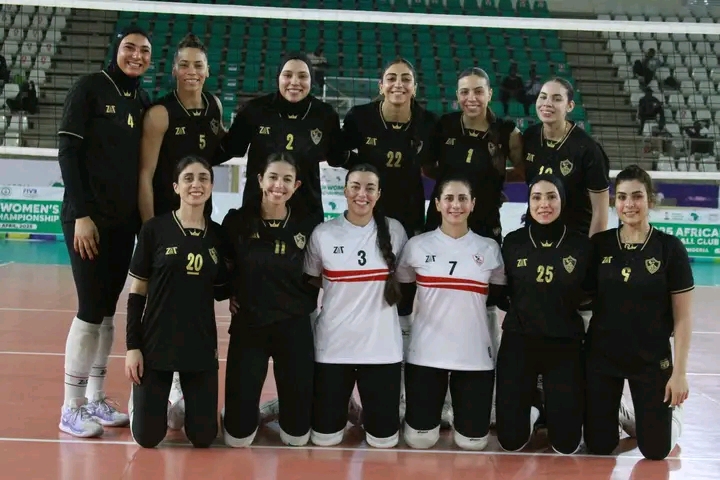
North Africans excel in club volleyball, much like football
This weekend marks the conclusion of the 2025 African Volleyball Women's Clubs Championship in Abuja.
The semi-finals showcased the dominance of North Africa, with three clubs—two from Egypt and one from Tunisia—advancing to this stage.
Just as Egypt has claimed the most Africa Cup of Nations (AFCON) titles and Al Ahly, along with other North African teams, has established a stronghold in club football, a similar trend is evident in the women's club volleyball tournament.
The finalists are both North African teams: Zamalek and Al Ahly, both hailing from Egypt.
This pattern of dominance is also reflected in football.
Factors contributing to North African supremacy include their structured approach, meticulous planning, player development processes, and a focus on meritocracy.
North African teams arrive well-prepared, equipped with extensive technical and tactical expertise. Each club boasts a coaching staff of over six members, unlike many clubs from other regions of Africa.
During the warm-up for the match against CFC of Tunisia, the Tunisian team was guided by a physical trainer, while the Nigerian host club appeared disorganized, with one individual handling multiple roles and two coaches sitting idly on the bench. The principles of division of labor and socialization, as taught in Economics and Commerce, were evidently absent in the Nigerian club's approach.
In contrast, North African teams employ a comprehensive coaching staff that includes two coaches, a physiotherapist, a statistician, and personnel dedicated to real-time analysis of opponents' strategies, all seamlessly integrated with the coaching team through their devices.
Their success is not attributed to chance or luck; rather, it stems from careful planning and a structured approach, with merit serving as the driving force.
Nigerian clubs often rely on the same group of players who participate in various teams and competitions, lacking a dedicated development strategy.
While it is acceptable to recruit players, it is essential for clubs to cultivate a core team of foundational players.


