
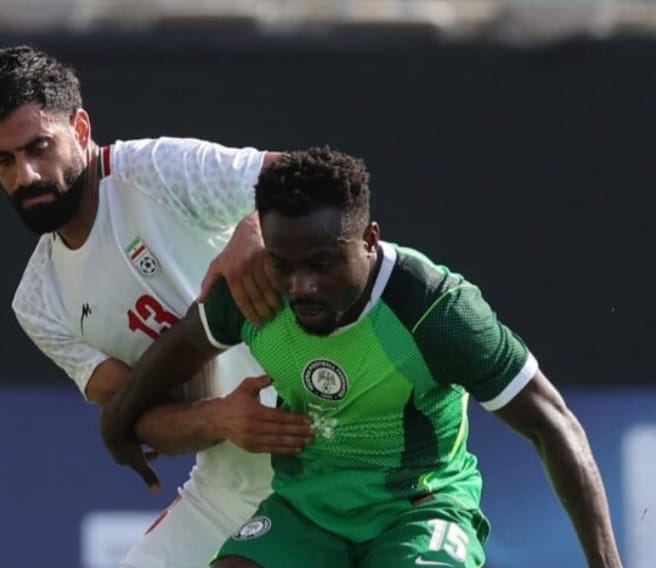
Super Eagles turn the page with Iran win amid World Cup heartbreak
The illusion has finally faded. While others march toward the global stage, Nigeria is left to confront a harder truth the Super Eagles are not headed to the 2026 FIFA World Cup.
Instead, they are rebuilding in the quiet corners of international friendlies, far from the spotlight where nations like DR Congo now thrive.
For weeks, hope had lingered in uncertain places. The Nigeria Football Federation clung to reports questioning the eligibility of certain DR Congo players, a narrative that briefly kept belief alive among fans eager for a late twist.
But as the Intercontinental playoffs reached their climax with DR Congo preparing to face Jamaica in the final reality set in.
The anticipated appeal to FIFA has faded into silence, leaving Nigeria with only what happens on the pitch.
And on that pitch in Antalya, Turkey, a different story began to take shape.
At the Corendon Airlines Park, the Super Eagles delivered a performance that suggested not despair, but direction. Under the guidance of Eric Chelle, a team still in transition showed flashes of a defined identity purposeful, energetic, and increasingly cohesive.
It took just six minutes for that intent to materialize. Samuel Chukwueze, lively from the start, sliced open Iran’s defense with a precise through pass. Moses Simon, earning his 96th cap, timed his run perfectly and finished with calm assurance to hand Nigeria an early lead.
The goal set the tone. Nigeria dictated the rhythm of the first half, pressing with intent and creating chances, though unable to extend their advantage before the break. Chelle’s fingerprints were evident quick transitions, width, and a willingness to attack with numbers.
The second half brought more of the same, along with fresh faces. Ademola Lookman turned provider shortly after the restart, threading a clever pass to Jerome Akor Adams, who doubled Nigeria’s lead with a composed finish.
Debutants like Emmanuel Fernandez and Chibuike Nwaiwu were introduced, signaling a shift toward building depth and future options.
Iran, led by Mehdi Taremi, responded with a goal midway through the half, briefly threatening a comeback. But unlike in the past, Nigeria did not lose control.
The team showed maturity, managing the closing stages with discipline as Chelle rotated his squad, bringing on Paul Onuachu, Chidera Ejuke, and Fisayo Dele-Bashiru to maintain intensity.
By the final whistle, the 2–1 victory felt like more than just a friendly win. It was a statement quiet, but significant.
Historically, it marked Nigeria’s second win over Iran, adding to the narrow Carlsberg Cup triumph in 1998, while avenging the frustration of their goalless draw at the 2014 FIFA World Cup.
More importantly, it offered a glimpse into what this team could become.
The contrast remains stark. While DR Congo edges closer to World Cup participation, Nigeria must rebuild from absence.
Yet within that absence lies opportunity a chance to discard false hopes, reset expectations, and construct something more enduring.
Next comes another test against Jordan on March 31. But beyond the fixture list, a larger journey is underway. The Super Eagles are no longer chasing shadows of qualification or clinging to administrative lifelines.
They are, at last, beginning the harder task forging a team capable of earning its place, not appealing for it.
Join the Savid News channel on WhatsApp:


