
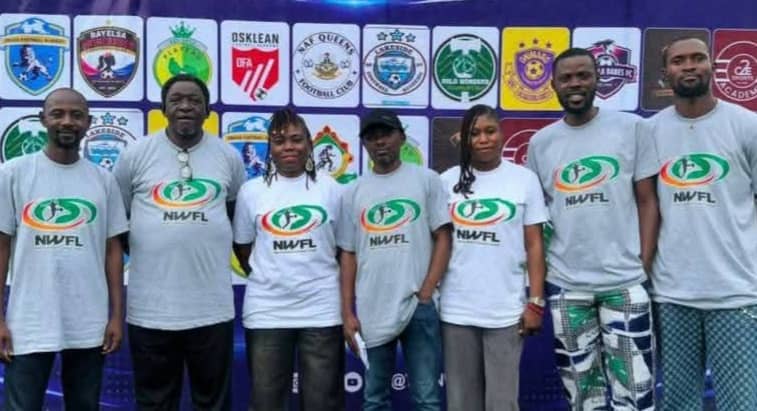
Moses Bako urges greater investment in NWFL
Football enthusiast and women’s football advocate Moses Nagogo Bako has called for increased investment in the Nigeria Women Football League (NWFL), describing the league as a vital platform for discovering, developing and showcasing football talents in the country.
Bako, who regularly attends NWFL tournaments and other women’s football competitions, said the representation of league players in recent squad selections highlights the importance of the competition and the need for greater recognition and support.
Making reference to a recent list of 20 selected players, Bako noted that 18, representing 90 per cent, are affiliated with NWFL clubs, while only two came from outside the league.
He said the figures underline the league’s significant contribution to the development of women’s football in Nigeria.
"It is evident that the NWFL is worth investing in. When 18 out of 20 players in a selected squad come from NWFL clubs, you cannot continue to question the relevance of the league. These clubs are developing the players, providing them with competitive platforms and contributing significantly to the growth of women's football," Bako stated.
Highlighting his personal commitment to the women's game, Bako humorously remarked: "I cannot go to the stadium to watch men's football and leave women's football behind. That is how much I believe in this game!"
However, he expressed concern over what he described as unnecessary negative narratives and retrogressive comments directed at the NWFL and its stakeholders.
While acknowledging the importance of criticism in improving sporting institutions, Bako insisted that such interventions should be constructive and focused on solutions rather than personal attacks.
"I love constructive criticism. In fact, I believe the NWFL needs people who can ask questions, challenge the system and demand better standards. But when criticism turns into personal attacks, insults and retrogressive comments, then we are no longer contributing to the development of the league."
He also questioned the tendency to hold the NWFL solely responsible for challenges that affect the wider Nigerian sporting and administrative environment.
"Let us be honest with ourselves. Some of the challenges affecting the NWFL are not peculiar to women's football. They are general Nigerian problems affecting different sectors. We cannot be fully aware of these realities and still single out the NWFL for condemnation as though it operates in isolation."
Bako urged individuals who have consistently dismissed the league or made remarks undermining its progress to reconsider their positions and apologise where necessary.
He stressed that acknowledging the NWFL's achievements should not prevent stakeholders from identifying areas requiring improvement.
"Nobody is saying the NWFL is perfect. There is room for improvement in administration, infrastructure, sponsorship, officiating, welfare and general organisation. But we must learn to separate genuine concerns from deliberate attempts to ridicule the league.
"If the league is producing players who represent our clubs and contribute to the national football structure, then it deserves recognition. Instead of constantly pulling it down, let us invest, support, criticise constructively and build."
The football enthusiast called on corporate organisations, government institutions, football stakeholders and supporters to regard the NWFL as an investment opportunity rather than a liability.
He maintained that the league's contribution to player development should encourage greater support, respect and constructive engagement from all stakeholders.
For Bako, the message is clear: the platform producing the players must not be overlooked if women's football is to achieve sustainable growth.


