
Shehu Dikko woos US Investors, unpacks Nigeria’s untapped Sports Economy
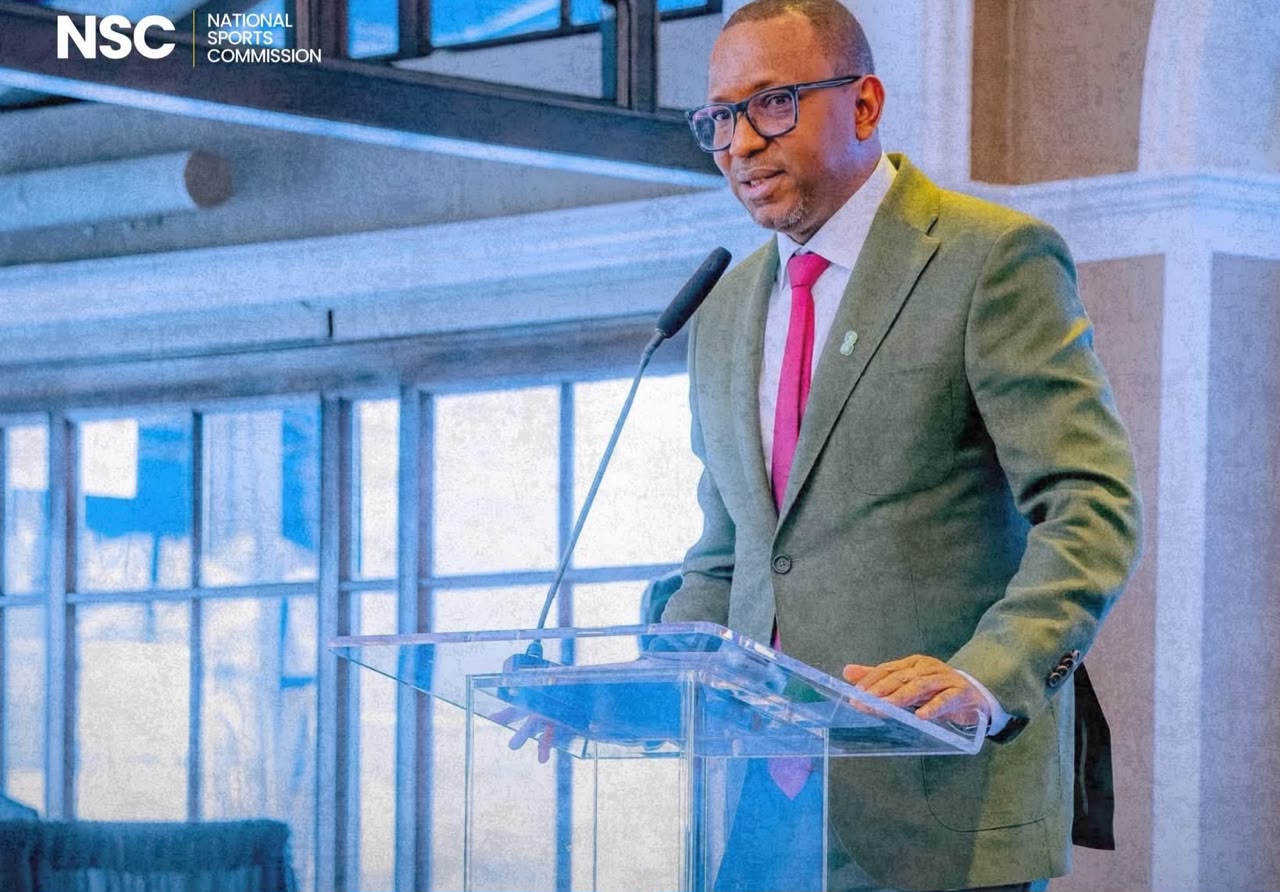
Chairman of the National Sports Commission (NSC), Mallam Shehu Dikko, has called for increased private-sector investment, stronger infrastructure and improved incentives to unlock the economic potential of Nigeria’s sports industry.
Dikko made the case while speaking at the U.S.-Nigeria Council Annual Breakfast in New York on Wednesday, September 23, on the margins of the 81st Session of the United Nations General Assembly.
The high-level engagement brought together Nigerian and American business leaders, government officials and other strategic stakeholders to discuss opportunities for trade, investment and partnerships, with sports and the creative economy featuring prominently.
Dikko said President Bola Ahmed Tinubu’s administration had taken deliberate steps to reset Nigeria’s sports ecosystem and position the sector to contribute more meaningfully to economic growth, job creation, investment and social development.
He stressed that sports should no longer be viewed solely through the prism of competition and medals, but as a broad economic ecosystem involving athletes, businesses, technology companies, creative professionals, service providers, investors and infrastructure developers.
According to the NSC chairman, government’s role should be to create the right enabling environment through sound policies, legal frameworks, incentives and concessions, while allowing the private sector to drive commercialisation and sustainable investment.
Dikko also stressed that the commercial strength of sports audiences, particularly football, and the opportunity to convert Nigeria’s huge fan base into greater sponsorship, broadcasting, technology and commercial partnerships.
He pointed to sports infrastructure as another major investment opportunity, citing the potential around stadiums, arenas, hotels and other facilities that can generate economic activity beyond match days.
Dikko said Nigeria was also looking towards lessons from the United States, where sports venues are operated as year-round commercial assets rather than facilities that generate income only when competitions are taking place. He said the government plans to invest in the rehabilitation and modernisation of sports infrastructure before creating opportunities for private-sector management and commercialisation.
The NSC chairman used the engagement to outline the Federal Government’s ongoing reforms under the Renewed Hope Initiative for Nigeria’s Sports Economy (RHINSE), including institutional and governance reforms, funding mechanisms, infrastructure renewal, education and athlete development.
He also revealed proposals around sports infrastructure financing, including a proposed sports infrastructure development bond, as well as the Sports City concept aimed at creating modern and commercially sustainable sporting environments.
Other components of the reform agenda highlighted by Dikko included the National Sports Education and Empowerment Programme (NSEEP), initiatives to strengthen the economic contribution of sports through job creation and GDP growth, and mechanisms designed to improve elite athlete development and diaspora engagement.
Dikko said the reforms were also intended to strengthen Nigeria’s performance across sports while using the sector as an instrument for national cohesion, youth development and the promotion of Nigeria’s cultural identity.
He further identified technology, sports data, club ownership, academies, athlete development and scholarship pathways as areas where Nigerian and American businesses could establish mutually beneficial partnerships.
The engagement reportedly generated interest among participants, with investors and technology stakeholders seeking further information on opportunities within Nigeria’s sports ecosystem. Dikko said the response demonstrated growing interest in sports as an investment sector.
The discussions in New York form part of the Federal Government’s broader effort to reposition sports as an economic industry capable of attracting capital, creating employment and supporting wider development.
Dikko’s presentation also reinforced the NSC’s stated strategy of moving Nigeria’s sports sector towards greater commercialisation, private-sector participation and sustainable infrastructure, while maintaining focus on competitive excellence and athlete welfare.


