
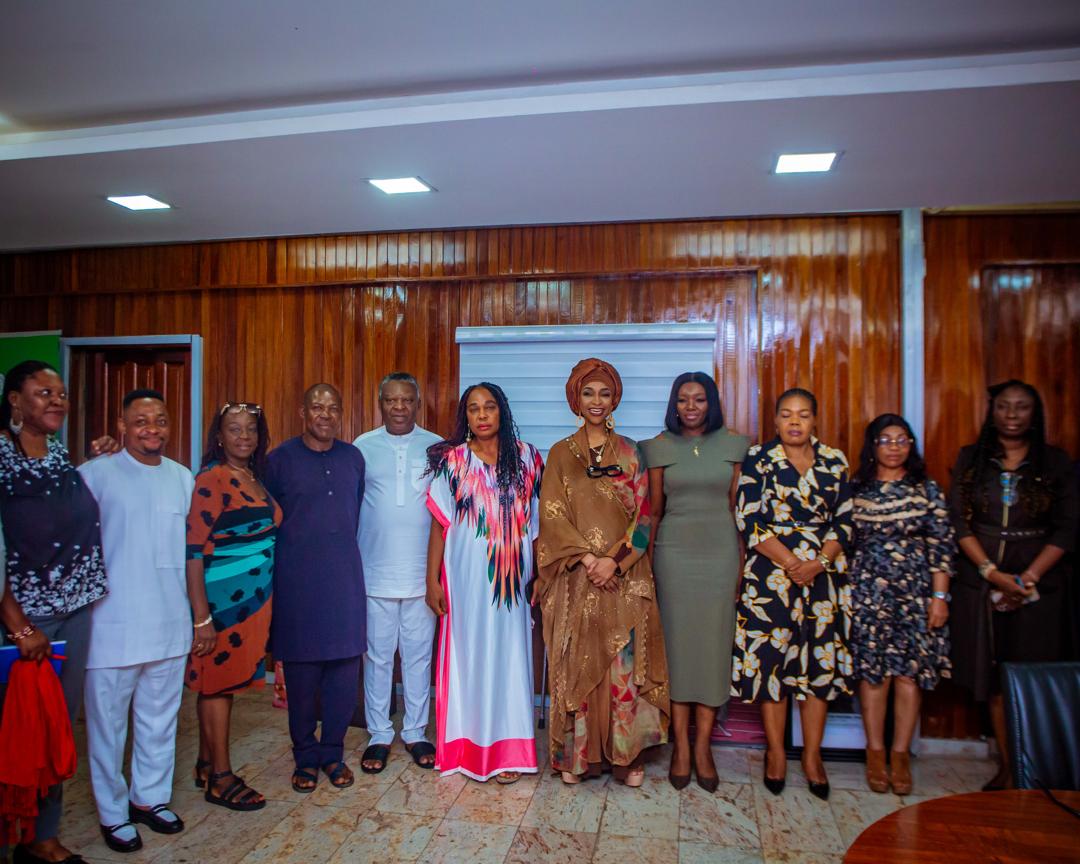
Nigeria launches four committees to drive creative economic growth
The Minister of Art, Culture, Tourism and Creative Economy, Hannatu Musawa, has inaugurated four high-level drafting committees to develop policy and financing frameworks for Nigeria’s arts, culture, tourism, and creative sectors.
At the inauguration held Tuesday in Abuja, the minister announced the committees: Policy & Strategy; Programmes & Implementation; Stakeholder Engagement; and Monitoring & Evaluation. Their mandate is to tackle structural challenges and unlock the sector’s economic potential.
Musawa noted that although Nigeria’s creative industry enjoys global recognition, it contributes only about 2.3% to national GDP. She attributed this to fragmented governance, weak enforcement of intellectual property laws, and limited access to financing.
Under the administration of Bola Ahmed Tinubu and its Renewed Hope agenda, the ministry has set ambitious targets: boosting the sector’s contribution to ₦100 billion in GDP and creating two million jobs for young Nigerians by 2030.
“You are charged with reviewing our existing institutional architecture and proposing a coherent governance framework that eliminates fragmentation… and positions the creative economy as a pillar of national development,” Musawa said, emphasizing the importance of the assignment.
Each committee is expected to submit its terms of reference and a 90-day work plan by April 21, 2026, followed by quarterly public briefings. The minister also acknowledged technical support from partners including Nigerian Economic Summit Group, UNESCO, and UNDP.
Speaking at the event, Ikenna Nwosu described the initiative as a major step toward economic transformation.
“The Creative Economy is a powerful economic frontier… Nigeria is uniquely positioned to lead this transformation on the African continent,” he said.
Nwosu stressed that the committees must deliver practical, evidence-based plans addressing persistent challenges such as financing gaps, weak IP protection, infrastructure deficits, and policy fragmentation.
The committees will operate in parallel across key focus areas, including:
Governance reform through inter-ministerial coordination
Development of Nigeria’s first comprehensive creative economy policy
Financing strategies, including public-private partnerships and a proposed Creative Economy Development Fund
Planning an international summit to position Nigeria as a global creative hub
The ministry reaffirmed its commitment to collaborating with stakeholders to unlock investment, drive innovation, and diversify the economy through creative industries.
Join the Savid News channel on WhatsApp:


