
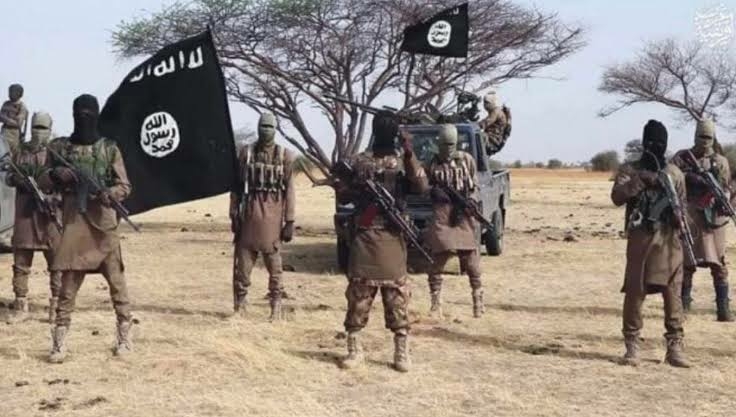
ORFA Report: Nigeria Recorded 79,323 Terror-Related Deaths, 34,773 Abductions Between 2020 and 2025
Nigeria recorded 79,323 deaths and 34,773 civilian abductions linked to terrorism and armed violence between 2020 and 2025, according to a new six-year report by the Observatory for Religious Freedom in Africa (ORFA), which says the findings reveal the scale and evolving nature of the country's security crisis.
The report, titled "Four Times Boko Haram? How the World Misreads Nigeria's Violence," was unveiled in Jos on Tuesday alongside a statement by ORFA's Senior Research Analyst, Frans Vierhout.
According to the organisation, the study found that Nigeria experienced an average of seven violent attacks every day, resulting in an average of 36 deaths daily over the six-year review period.
ORFA said 42,033 civilians were killed during the period, while 37,290 deaths involved security personnel and members of armed groups.
The organisation stated that the findings were based on years of research that cross-referenced information from multiple sources, including field investigations, local partners, academic projects, media reports, non-governmental organisations and verified social media content.
Report Challenges Prevailing Narratives
ORFA argued that its analysis challenges the widespread perception that Boko Haram and the Islamic State West Africa Province (ISWAP) are responsible for most civilian deaths in Nigeria.
According to the report, Boko Haram accounted for 8 per cent of civilian killings, while ISWAP was responsible for 4 per cent, representing a combined 12 per cent of civilian fatalities recorded during the review period.
The report further claimed that armed groups it categorised as "Fulani Terror Groups" were responsible for 44 per cent of civilian deaths, amounting to 18,577 killings, compared to 4,941 civilian deaths attributed to Boko Haram and ISWAP combined.
ORFA stressed that its classification refers specifically to armed groups and should not be interpreted as referring to the broader Fulani ethnic population.
"ORFA is careful to distinguish between armed Fulani terror groups and the Fulani people as a whole, the vast majority of whom are not involved in violence," the report stated.
Commenting on the findings, Vierhout said the data pointed to a consistent pattern in the nature of attacks across affected communities.
"The data makes this very difficult to ignore. We look at how killing occurs, who they target, where they operate, the seasonal fluctuations of killings, and the evidence points strongly in one direction."
He added:
"Violence linked to Fulani militias is the dominant force behind Nigeria's death toll. The Western preoccupation with Boko Haram is, at best, misleading. Nigeria is incubating a terror network which the outside world has yet to acknowledge."
Nearly 35,000 Civilian Abductions Recorded
The report also documented 34,773 civilian abductions between 2020 and 2025.
According to ORFA, groups classified in the report as "Fulani Terror Groups" were responsible for 43 per cent of the kidnappings, while 49 per cent were attributed to "Unidentified Terror Groups."
Religious Dimension Highlighted
The report also examined what it described as the religious dimension of the violence.
According to ORFA's findings, 28,551 Christians and 13,224 Muslims were killed during the six-year period.
The organisation claimed that, after adjusting for state populations, Christians in affected areas were killed at 4.4 times the rate of Muslims.
On kidnappings, ORFA reported that 15,932 Christians and 15,272 Muslims were abducted between 2020 and 2025.
Citing survivor testimonies, the report alleged that Christian hostages generally faced higher ransom demands, longer negotiations, harsher treatment and a greater risk of execution, including in some cases after ransom payments had been made.
Senior Research Analyst Steven Kefas, author of Captivity by Creed: The Religious Sorting System Nobody Talks About, said survivor accounts pointed to a recurring pattern.
"From the moment of capture, Muslim and Christian hostages enter different realities. It is not about individual captors. It is a system—consistent across multiple states, armed groups and multiple years of survivor testimony."
Majority of Victims Killed in Attacks on Farming Communities
ORFA said its investigation found that 75 per cent of civilian deaths occurred during attacks on farming communities, with many incidents involving kidnappings, rape and widespread destruction of property.
The organisation said each incident in its database was analysed using up to 60 separate data points, drawing information from five major sources, including field research, local partners, academic studies, media reports, NGO documentation and verified social media evidence.
ORFA concluded by calling for broader recognition of what it described as the religious dimensions of Nigeria's security crisis, arguing that effective responses to terrorism and armed violence require a fuller understanding of the patterns identified in its six-year investigation.
The report reflects the findings and analysis of the Observatory for Religious Freedom in Africa and includes claims and classifications made by the organisation that have not been independently verified by this publication.


